


Table of Contents
- Understand the Difference Between a Reading Slump and a Long Break
- Start With the Best Books for Reading Slumps
- How to Find Time to Read With a Busy Schedule
- Create a Reading Environment That Invites You Back
- How to Build a Daily Reading Habit That Sticks
- Manage Digital Distractions to Reclaim Deep Reading
- Get Back Into Reading With Community and Accountability
Last Updated: August 25, 2026
Understand the Difference Between a Reading Slump and a Long Break
Not every pause in reading means you've lost your way. The distinction between a reading slump and a genuine long break matters because the fix depends on which one you're facing.
A reading slump is temporary friction with reading itself. You still want to read. Your TBR pile sits there calling to you, but something feels off, the words aren't grabbing you, nothing feels right, or you've hit a stretch where every book disappoints. Slumps typically last weeks, sometimes a few months (apa.org). They're frustrating but they pass.
A long break, by contrast, is an extended absence from reading. Life got in the way. Work consumed your time. You got distracted by other hobbies. Maybe you moved, changed jobs, or went through a season where reading simply wasn't on your radar. You didn't actively avoid books, you just stopped reaching for them. Long breaks can stretch a year or longer.
Why this matters: A reading slump needs genre-switching, shorter books, or a palette cleanser. A long break needs permission and a gentle reentry point. If you treat a long break like a slump, you'll keep reaching for ambitious literary fiction when what you actually need is something that feels easy and welcoming.
The good news is that getting back into reading after a long break isn't about forcing yourself. It's about removing the friction that made reading feel like one more obligation instead of one more joy.
Start With the Best Books for Reading Slumps
The books you choose matter more than you think when you're getting back into reading. Pick wrong and you'll reinforce the belief that reading isn't for you right now. Pick right and you'll remember why you loved it in the first place.
Start with what worked before. Revisiting childhood favorites or books you've already loved removes the risk of disappointment. You know these stories work for you. There's comfort in returning to a familiar world. If you loved a particular author or series years ago, that's your entry point now. You're not starting from scratch, you're reconnecting.
Reach for page-turners. Thrillers, mysteries, and fast-paced fiction pull you forward without requiring deep concentration. Your attention span will rebuild naturally when the story itself demands it. A thriller that keeps you up past your bedtime does more for your reading habit than a challenging literary novel that feels like homework.
Consider short stories or novellas. These deliver complete narratives in bite-sized chunks. They're perfect for rebuilding reading stamina without the commitment of a 400-page novel. Many readers find that finishing a short story creates momentum to tackle something longer.
YA novels aren't just for teenagers. Young adult fiction is often underrated by adult readers returning to books. YA tends to be engaging, fast-moving, and emotionally honest. It won't talk down to you, it'll just keep you turning pages.
GreyDoor Goods curates mystery book blind dates specifically designed for readers like you. These aren't random picks, they're thoughtfully selected based on what draws people back into reading. The mystery element adds intrigue without requiring you to commit to a specific genre or author before you start.
How to Find Time to Read With a Busy Schedule
The most common objection to getting back into reading isn't lack of interest, it's lack of time. Between work, family, and everything else, reading feels like a luxury you can't afford.
That's the wrong frame. Reading isn't a luxury. It's a small pocket of control in a chaotic day.
Stack reading into existing routines. You don't need to carve out a dedicated hour. Read during your morning coffee. Read for 10 minutes before bed. Read during your lunch break. Read while waiting for an appointment. These fragments add up. A consistent 15 minutes daily is 90 hours of reading per year (peer-reviewed research).
Replace one scroll habit with reading. Most people spend 20-30 minutes daily on social media without thinking about it. Replace one of those sessions with reading. Your phone will still be there. Your book won't judge you for choosing it instead.
Use audiobooks to reclaim dead time. Audiobooks aren't "real reading" to some purists, but they're real escape. Listen while commuting, exercising, or doing chores. Audiobooks remove the time-finding problem entirely because you're reading during time you'd otherwise waste.
Batch your reading. Some people find that reading 45 minutes on Sunday is easier than trying to find 10 minutes every day. Others do the opposite. Experiment with what fits your life. Consistency matters more than duration.
The key is treating reading as non-negotiable, not as something you do when everything else is done. Everything else will never be done.
Create a Reading Environment That Invites You Back
Your environment shapes whether reading feels like an escape or another task on your to-do list. A thoughtfully designed reading space removes friction and invites you back.
Find your corner. This doesn't require a dedicated room. A chair by a window, a corner of your couch, even a spot on your bed works. The point is having a place you associate with reading. Your brain starts to recognize that space as a signal: this is where I pause and read.
Control the light. Natural light is ideal, but any consistent, comfortable light works. Harsh overhead lighting creates eye strain and tension. A warm lamp or natural window light signals relaxation to your brain.
Remove distractions deliberately. Put your phone in another room. Close your laptop. Silence notifications. You're not building discipline, you're removing the competition for your attention. Your book can't compete with a buzzing phone.
Make it physically comfortable. A blanket, a cushion, a mug of tea, these aren't indulgences. They signal to your body that this is a pause, a moment of care. Comfort removes one more reason to stop reading.

The Library Card Glass from GreyDoor Goods fits perfectly into this space. It's a small object with a big signal: this corner is for readers. The vintage library card design reminds you that reading is an act of intention, not something that just happens. At just $8.99, it's an affordable way to make your reading space feel intentional and inviting.

How to Build a Daily Reading Habit That Sticks
Getting back into reading after a long break requires turning reading into a habit. Habits are easier than willpower because they require no decision-making.
Stack reading onto an existing habit. If you already drink coffee every morning, read during that time. If you already take a walk, listen to an audiobook. Habit stacking works because you're using an established routine as a trigger for the new behavior.
Start absurdly small. Commit to reading five pages. Not a chapter, not 30 minutes, five pages. This sounds trivial, but it works. Five pages is so easy that you'll do it even on hard days. And most days, you'll read more than five pages because momentum builds.
Track it visually. A simple calendar where you mark off each day you read creates a chain. The goal becomes keeping the chain unbroken, not reading a certain amount. This works because it focuses on consistency over performance.
Forgive the gaps. Life happens. You'll miss days. The difference between people who build reading habits and people who don't is that successful readers don't treat one missed day as permission to quit. They just pick it up the next day.
Connect reading to how you want to feel. Don't frame reading as something you "should" do. Frame it as something you get to do. Reading is your escape, your mental break, your permission to pause. When you connect reading to the feeling you're chasing, the habit builds itself.
Manage Digital Distractions to Reclaim Deep Reading
Getting back into reading means competing against smartphones, streaming services, and infinite scroll. Your attention isn't weak, it's just been trained to expect constant novelty.
Understand the real problem. It's not that you can't focus. It's that your brain has been rewired to expect a dopamine hit every few seconds. Reading requires sustained attention on a single thing. That feels hard because your brain has forgotten how.
Create friction for distractions. Make your phone harder to reach. Put it in another room during reading time. Disable notifications. Log out of social media apps. You're not relying on willpower, you're making the distraction require effort.
Give your brain an adjustment period. The first 10 minutes of reading will feel difficult if you've been away for a while. Your mind will wander. You'll think about checking your phone. This is normal. It passes. By page 15 or 20, your brain settles in. By page 50, you're in flow.
Recognize that deep reading is a skill. If you haven't read seriously in years, your capacity for sustained attention will have atrophied. This isn't permanent. It rebuilds quickly with practice. Most people regain their reading focus within 2-3 weeks of consistent reading (peer-reviewed research).
Use reading as a digital detox. Reframing reading as a break from screens makes it feel restorative instead of like you're missing out. You're not avoiding your phone, you're choosing something better.
Get Back Into Reading With Community and Accountability
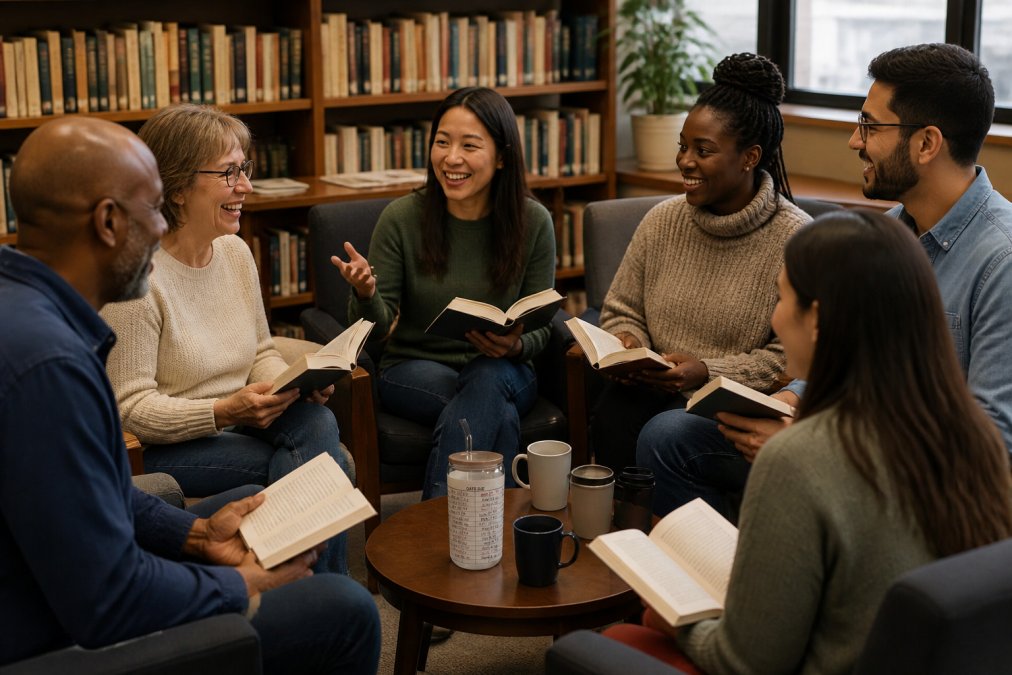
Reading doesn't have to be solitary. A bookish community transforms getting back into reading from a personal challenge into a shared experience.
Join a book club. This doesn't mean committing to a rigid monthly meeting. Book clubs exist in every format: online, in-person, casual, serious. A book club creates accountability (you'll read because you committed to discussing it), connection (you're not alone in this), and discovery (you'll encounter books you wouldn't have chosen alone).
Find your reading community online. Bookstagram, BookTok, Goodreads, and reading communities on Reddit all exist for readers who want to share what they're reading. You don't have to be an influencer, just participate in discussions, share your thoughts, and find people who love the same books you do.
Start a casual reading group with friends. You don't need a formal structure. Text a few friends a book recommendation each month. Share what you're reading. Ask for recommendations. This creates low-pressure accountability and discovery.
Use your library as a community space. Libraries aren't just for borrowing books. They host reading groups, author events, and book discussions. Many libraries have reading programs for adults with built-in community and sometimes even prizes. A library card is free, and it's your entry point to a reading community.
Share your reading journey publicly. Tell people you're getting back into reading. Ask for recommendations. Share what you're reading on social media. This creates accountability and often leads to great conversations. You'll be surprised how many people want to support your reading comeback.
GreyDoor Goods's Black Cat Mug "Shhh" is perfect for book club meetings or your own reading ritual. At $14.66, it's a small way to signal to yourself and others that you're a reader. It's practical (it holds your tea or coffee), charming (the black cat peeking over book pages is a delightful detail), and conversation-starting (book lovers notice).

The Roosevelt Notebook from GreyDoor Goods works beautifully as a reading journal. Track what you've read, jot down thoughts about books, record quotes that resonate. At $18.72, it's an affordable way to deepen your engagement with reading and create a record of your comeback.
Getting back into reading after a long break isn't about forcing yourself through difficult books or finding time you don't have. It's about removing friction, choosing books that genuinely appeal to you, and remembering that reading is a form of rest, not another obligation. Start with what feels easy. Build from there. Your reading habit will return faster than you expect, especially when you surround yourself with the right environment and community. GreyDoor Goods can help you create that intentional space, from the Library Card Glass that signals this corner is for readers, to the cozy atmosphere that invites you back day after day.
Frequently Asked Questions
How do I know if I'm in a reading slump or just taking a long break?
A reading slump is when you want to read but struggle to focus or feel unmotivated, even though books once brought you joy. A long break is simply time away from reading with no pressure or guilt attached. The key difference: a slump involves frustration; a break is intentional rest. If you're asking this question, you're likely ready to get back into reading and want to move forward. Both situations respond well to the same strategies, starting small, choosing the right book, and building momentum gradually.
What are the best books for reading slumps?
Page-turners work best: thrillers with fast pacing, short story collections you can finish in one sitting, or beloved childhood favorites that feel like comfort reads. Avoid dense literary fiction or books that demand heavy concentration. Consider mystery novels, YA thrillers, or novellas, anything under 300 pages that hooks you immediately. The goal isn't literary merit; it's rekindling your love of reading. Many readers find that revisiting a favorite author or genre from their past helps them remember why they loved reading in the first place.
How many pages should I read per day to build a reading habit?
Start with 10-15 pages daily rather than aiming for hours. This is achievable even with a busy schedule and builds consistency without burnout. Once reading becomes automatic, you'll naturally read more. The habit matters more than the volume. Some days you'll read 50 pages; other days, 5. What matters is showing up regularly. After 3-4 weeks of daily reading, the habit becomes easier to maintain because your brain starts craving that reading time.
Can I use audiobooks to get back into reading?
Yes. Audiobooks count as reading and are especially helpful for people with busy schedules or short attention spans. You can listen during commutes, exercise, or household tasks. Many readers find audiobooks help them rebuild reading stamina and rediscover genres they'd abandoned. Pair audiobooks with physical reading to ease back in, some days listen, other days read on the page. The combination keeps your reading habit flexible and sustainable, which is crucial when you're rebuilding consistency after a long break.
This article was written using GrandRanker