


Table of Contents
- Why a Cozy Atmosphere Matters (The Psychology of Comfort)
- Step 1: Get Your Lighting Right for a Cozy Atmosphere
- Step 2: How to Layer Textures in Interior Design
- Step 3: Essential Items for a Cozy Home
- Step 4: Cozy Reading Nook Ideas for Every Space
- Step 5: Build a Cozy Atmosphere on a Budget
- Conclusion
Last Updated: August 19, 2026
Why a Cozy Atmosphere Matters (The Psychology of Comfort)
A cozy atmosphere is a psychological state your home either supports or undermines. Research in environmental psychology shows that physical surroundings directly shape mood, stress levels, and sense of safety. When a space feels warm and inviting, the nervous system responds: heart rate slows, cortisol drops, and the mind shifts from vigilance to rest.
The Danish concept of hygge captures this well. According to the Meik Wiking Institute for Happiness research on hygge, coziness is about creating conditions for presence and connection, not luxury. A space needs to feel intentional.
Coziness is a sensory experience, not a shopping list. It involves what you see, touch, smell, and hear. The best approach addresses all these layers, not just visual ones. At GreyDoor Goods, we think about coziness as something you curate over time, layering objects, textures, and scents that carry personal meaning alongside aesthetic appeal.
Step 1: Get Your Lighting Right for a Cozy Atmosphere
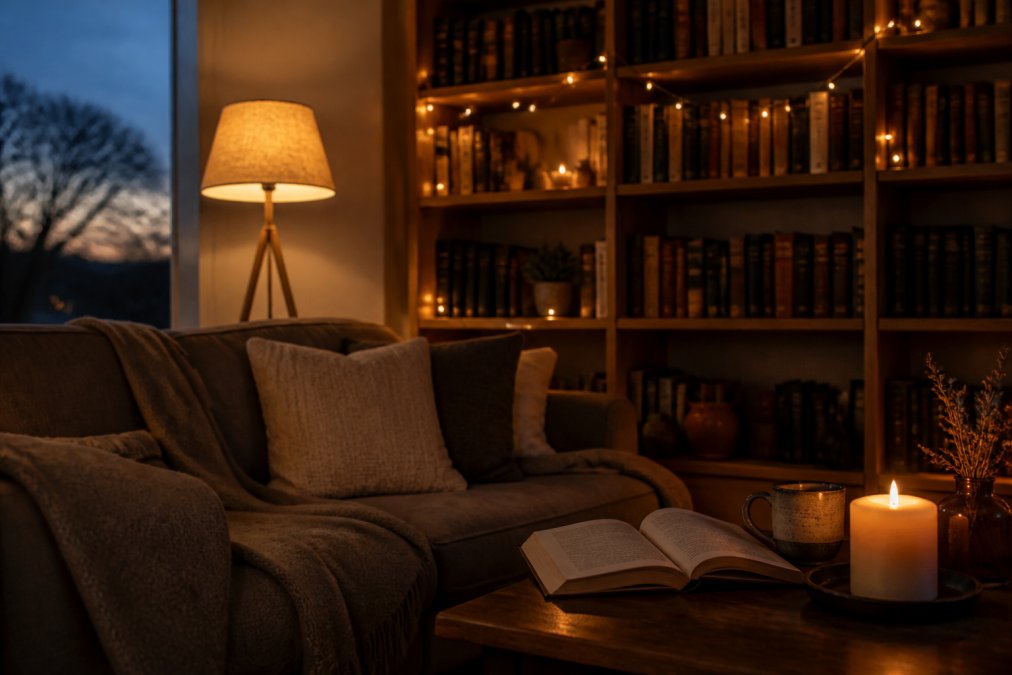
Lighting is the single most impactful variable in any room's atmosphere. Overhead lighting at full brightness creates a clinical quality that works against coziness. The fix is layering: multiple light sources at different heights and intensities producing an ambient glow rather than uniform wash.
Choosing the Right Color Temperature (Kelvin Explained)
Color temperature, measured in Kelvin (K), determines whether light reads as cool and clinical or warm and inviting.
- 2700K-3000K: Warm white. The sweet spot for living rooms, bedrooms, and reading nooks. Mimics candlelight.
- 3500K-4100K: Neutral white. Better for kitchens and workspaces.
- 5000K-6500K: Daylight/cool white. Avoid for relaxation spaces.
Replace any bulb above 3000K in living and sleeping areas. Dimmable bulbs in the 2700K range let you shift from functional afternoon light to soft evening mood with a single adjustment.
Layering Light Sources for Ambient Glow
Aim for at least three light sources per room at different heights:
- Floor lamps in corners push light upward, softening shadows.
- Table lamps on side tables create intimate pools of warm light at eye level.
- Accent lighting (fairy lights, candles, LED strips) adds depth and visual texture.
Dimmable switches or smart bulbs make this flexible. Real flame candles produce a quality of light no bulb replicates and add scent simultaneously.
Step 2: How to Layer Textures in Interior Design
Texture is the foundation of tactile comfort. A room with a single dominant material never feels cozy. The principle is textural contrast: pair rough with smooth, matte with sheen, structured with soft. A linen sofa gains warmth from a chunky knit throw. A wooden floor feels more inviting beneath a plush area rug.
Using Area Rugs to Define Space and Add Warmth
Area rugs add tactile warmth underfoot and visually anchor seating arrangements, especially useful in open-plan spaces.
Key rules:
- Size matters most. Front legs of all major seating pieces should sit on the rug.
- Layer rugs for depth. A flat-weave rug beneath a thicker, plush rug adds visual complexity and warmth.
- Natural fibers (wool, jute, cotton) outperform synthetics for texture and longevity.
According to the American Society of Interior Designers on flooring and comfort, flooring texture ranks among the top environmental factors people associate with home comfort. Layered rugs are among the most accessible ways to transform a space without structural changes.
Soft Textiles: Throw Blankets, Plush Pillows, and Window Treatments
Throw blankets should be draped casually, signaling the space is meant to be used.
Pillows work best in odd numbers and varying sizes. Mix a large structured pillow with a smaller plush one and a lumbar pillow. Vary fabrics: velvet, boucle, and linen together create more interest than matching covers.
Window treatments are underrated contributors to coziness. Heavy linen or velvet curtains hung high and wide add softness to walls and improve acoustic comfort by absorbing sound.
| Textile Element | Cozy Effect | Practical Tip |
|---|---|---|
| Throw blankets | Warmth, invitation to rest | Drape loosely; wool or sherpa for best texture |
| Plush pillows | Softness, visual depth | Mix 3 sizes, 2-3 fabric types |
| Area rugs | Warmth underfoot, space definition | Front legs of furniture on rug |
| Heavy curtains | Sound absorption, visual softness | Hang 6-12 inches above window frame |
| Woven wall hangings | Textural contrast on walls | Pair with framed art for balance |
Step 3: Essential Items for a Cozy Home
Some objects earn their place through sensory impact rather than scale or expense. Candles, books, and meaningful objects work on multiple senses simultaneously, which is why they punch above their weight.
Scent and Fragrance: Candles and Diffusers
Scent is the fastest route to emotional response. The olfactory system connects directly to the brain's limbic region, governing memory and emotion. A particular candle scent can make a room feel instantly familiar and safe.
For coziness, warm and woody scents work best: sandalwood, cedar, vanilla, amber, and spiced notes like clove and cinnamon.
Candles offer both scent and visual warmth. Reed diffusers provide consistent, lower-intensity fragrance. Essential oil diffusers give maximum control. One well-chosen scent per room is more effective than several competing fragrances.
Personal Touches and Meaningful Decor
A cozy atmosphere requires personal objects: well-loved books, photographs, small figurines that bring you joy. These cannot be prescribed but reflect genuine interests and memories.
GreyDoor Goods exists in this space. Our curated selection of black cat-themed treasures, mystery novels, and thoughtfully assembled box bundles are designed to earn permanent shelf spots because they mean something.
Step 4: Cozy Reading Nook Ideas for Every Space
A dedicated reading nook creates a defined, intentional spot signaling rest and reading. It does not require a spare room or architectural alcove.
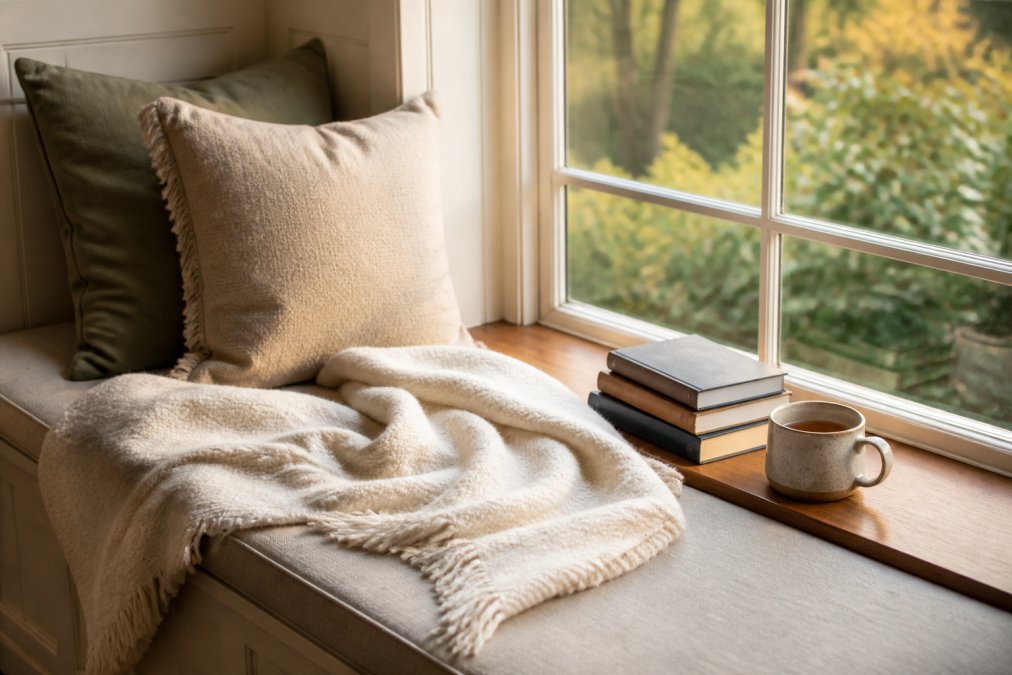
Window alcove: Add a cushioned bench with storage underneath. Layer with plush pillows and throw blanket. Position a small side table for a drink.
Corner of a living room: Pull a comfortable chair into a corner, add a floor lamp behind and to one side, place a small bookshelf within arm's reach. A small rug beneath the chair defines the zone.
Under the stairs: A built-in bench with cushioning, low shelf for books, and pendant light transforms wasted space into a charming nook.
Bedroom reading corner: A single armchair beside the bed with dedicated lamp and small table creates a distinct reading zone.
Books on shelves naturally absorb ambient sound, making reading nooks acoustically comfortable and conducive to focus.
Step 5: Build a Cozy Atmosphere on a Budget
Many effective cozy atmosphere techniques cost very little or nothing.
Highest impact, lowest cost:
- Rearrange lighting. Move existing lamps to corners and lower surfaces. Replace one overhead bulb with warm 2700K. Cost: under $10.
- Declutter one surface. A clutter-free side table with a single candle and meaningful object reads as intentional.
- Drape a blanket. A throw blanket draped over a chair immediately softens the space.
Medium investment, high return:
- Buy one quality area rug. Thrift stores and online marketplaces offer good-quality rugs at fraction of retail price.
- Add fairy lights. Warm white fairy lights on a bookshelf create ambient glow for minimal cost.
- Introduce one plant. A small pothos or snake plant adds visual warmth and connection to nature with minimal care.
DIY projects:
- Make a window seat cushion. Foam cut to size and wrapped in fabric creates a custom cushioned seat affordably.
- Build a book display shelf. A simple floating shelf styled with favorite books and a small object creates a personal focal point.
According to University of Exeter research on personalized workspaces and wellbeing, environments people actively shape to reflect their preferences produce measurably higher wellbeing outcomes. The act of curating your space is part of what makes it feel cozy.
A budget space thoughtfully arranged, where every object has purpose, feels more inviting than an expensive room assembled without sensory intention.
Building a genuinely cozy atmosphere requires thinking through lighting temperature, textile layering, scent, acoustic comfort, and personal meaning. If you are looking for objects that carry genuine character and intention, GreyDoor Goods offers curated candles, cozy blankets, and mystery book blind dates that bring both delight and meaning to a space. Every item is chosen to feel like a discovery, not a filler. Visit GreyDoor Goods to find your next favorite thing.
Frequently Asked Questions
How do I create a cozy atmosphere in a small room?
Small rooms benefit most from warm lighting, layered rugs, and clutter-free surfaces. Swap overhead fluorescent bulbs for dimmable lamps with bulbs in the 2700K-3000K range. Add a plush area rug to anchor the space, and limit decor to a few personal, meaningful pieces. Soft textiles like throw blankets and pillows add warmth without taking up floor space. The goal is a sensory experience that feels intentional, not crowded.
What are the best lighting techniques for a cozy home?
Layer at least three light sources: an ambient overhead light on a dimmer, a floor or table lamp for mid-level warmth, and accent lights like fairy lights or candles for a soft glow close to eye level. Bulbs in the 2700K-2900K range produce the warmest, most inviting tones. Avoid cool white or daylight bulbs (5000K+) in living spaces, they create an office feel rather than a home sanctuary mood.
What makes a home look cheap instead of cozy?
The most common culprits are mismatched lighting (mixing cool and warm bulbs in the same room), bare floors with no rugs, and too many small decorative items that lack a unifying color palette. Thin curtains that let in harsh light also undercut warmth. Fixing these doesn't require a large budget, a single layered rug, a set of matching warm-toned bulbs, and one quality throw blanket can shift the entire feel of a room.
How do I build a cozy reading nook without a dedicated room?
A cozy reading nook can fit into any corner, window alcove, or underused wall space. Start with a comfortable seat, a cushioned chair, a floor pouf, or even stacked pillows. Add a small side surface for your drink and a dedicated lamp at reading height. A soft throw blanket and a nearby shelf or basket for books complete the setup. Acoustic comfort matters too: a rug and fabric panels absorb sound and make the nook feel more enclosed and restful.
This article was written using GrandRanker